Oh, She's Bookish: The Pōhaku
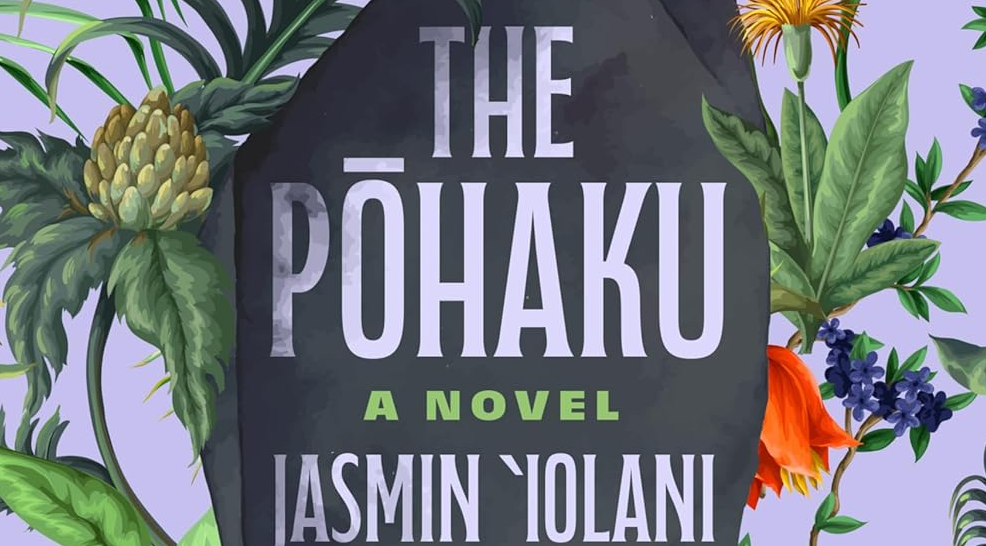
The Pōhaku, Book Cover Image
Completed: June 13th, 2026
We truly are in an era of anticipated follow-ups. First, I got to wait ever so patiently for Bone of My Bone after falling for My Darling Dreadful Thing, and now the follow-up to Hula, a book that had a profound effect on me.
Hula is the story of my childhood. The story of my mother, my grandmother and her mother. It’s the story of being a red-head in Hawai’i. Of never feeling at home, no matter how hard you fought, and of exile on the mainland. It’s the story of regret, and that at the heart of Hawai’i. At the heart of Moana, is your belonging. Is your home. You need only look to ‘aina, and not your mirror, to know this. And in excruciating detail the author shows how much pain, suffering, and abuse it takes to have this intuitive feeling beaten from you.
Understandably I was excited and my expectations were high. There is very little fiction set in Hawai’i that is written by people who understand and love the islands. So, when the Pohaku was released, I was first in line at the library to pick up a copy.
The opening chapters are striking. The dynamic is that tutu-lady, the grandmother of the main character, is telling the stories of her mo’opuna, her grandchild, while she visits the hospital trying her best to heal her granddaughter while she is in a coma. It’s all grand tales of their genealogy and of their kuleana, their family obligation to a small stone - a stone birthed from their ancestors.
The way the grandmother character is written brings tears to my eyes without fail. She is so authentic to old Hawai’i. In her pidgin, her sensibility, her love of God while she slips ti leaf beneath her granddaughters pillow. I have nothing but good and love for this character.
Early on, the story of her ancestors witnessing the birth of Queen Ka’ahumanu and the Pohaku is striking and feels like ka’au, an old legend you would hear around a fire late at night in the valley. It felt like reliving history and as a Pacific girl, it felt like I was filling in gaps to my story and relationship to Hawai’i. Everything changes when they hit the mainland.
This books becomes so shallow and light on details so quickly. It is almost exactly the same feeling I had with Bone of My Bone, where the author has a book or two under their belt and now they want to expand and say something more than their personal experience. I just don’t think in either case it was as well-researched or as well-written as it ought to be. This book in particular gets exceptionally light on details in the last fourth or fifth. It feels like we are sprinting to the finish line for an ending that doesn’t really do anything. It doesn’t setup a philosophical question or imperative, which is pretty common for Hawaiian stories, nor does it end normatively. You turn the last page and feel that you must be missing something. In all fairness, Hula’s ending was a nothing ball as well, so not super surprising, but every page of Hula hit me like a truck, for better or worse, so I was hoping to not need an ending. Alas.
I can’t help but walk away from this book disappointed. It felt like the author gave up what she is excellent at to embrace something more palatable to a broader, mainland audience. It loses authenticity and depth. It loses the warmth unique to Pacific people. It is also unacceptable to write stories of Native Americans and not have done your due diligence. The lack of details and specificity and the lackluster queer romantic elements was deeply frustrating, but also so much more visible because there was so little going on in the mid-to-late story beats.
I’m not sure I can recommend this book beyond the first third, but that may be because I am exceptionally hard on Pacific stories. They make me vulnerable and hopeful, and this book doesn’t have to do what Hula did to me. It can just be a story, and I think that will be okay for most people. Especially if they aren’t from the Pacific.